Project Genesis
The Old AxolotlProject Genesis is the post-Extermination program to bring organic life back to Earth, culminating in the decision to make human beings from preserved biological archives. Its laboratories turn MIT into a hatchery, its work draws transformers from rival groups, and its success forces them to confront a question the project cannot answer through DNA alone: what, exactly, makes a human life continuous with the humanity that came before?
Purpose and Scientific Method
The project begins from a stark premise: the Extermination left no organic compounds or surviving protein chemistry. Frances Rory describes a route back from inorganic matter to life that does not require repeating the entire history of evolution. Before the catastrophe, biochemists had learned to synthesize nucleotide chains; researchers also possessed the chemical building blocks needed to cross from inorganic to organic matter, precise DNA maps from the Human Genome Project, and technology for synthesizing eggs and preparing incubator wombs. The aim is not merely to grow organisms, but to produce a human being.
That ambition depends on both genetic records and the practical infrastructure to use them. Vincent Cho had tested resurrection techniques on the Axolotl, a species already close to extinction before the Extermination. Earlier scientists had not carefully archived every species, since many had seemed safe from extinction; those already extinct were difficult to recover for lack of biological source material. The best candidates for revival were therefore species whose decline had already prompted scientists to preserve not only DNA, but complete epigenetic recipes. The Axolotl’s records made it one of the early tests of Cho’s work and an emblem of life returned from the edge of disappearance.
The project’s methods expose a limit in the idea that a genome is a complete blueprint. Jarlinka explains that organisms can develop differently even when they receive exactly the same DNA and are grown under exactly the same conditions. Gene expression depends on which genes activate and when; the relevant influences are stored beyond the DNA sequence, in intergenerational memory. Histones shape how DNA is arranged, while methylation can register lifestyle, trauma, illness, social circumstances, education, residence, and even the air a person breathes. The genetic archive can preserve a sequence, but it cannot by itself restore every history that made that sequence into a particular life.
Laboratories and Expansion at MIT
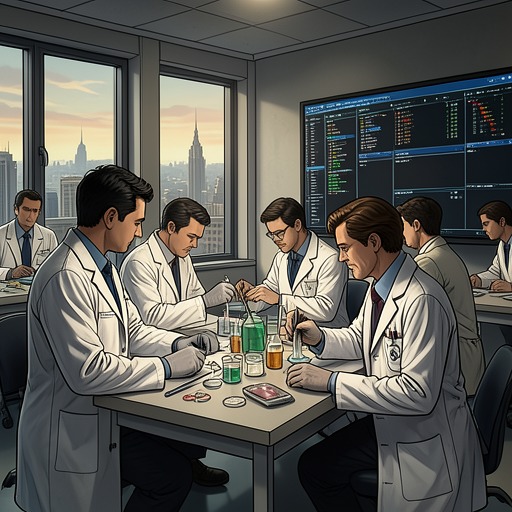
Project Genesis occupies the university by degrees. Vincent Cho appropriates university blocks and laboratories, fitting incubators, aquariums, terrariums, and biostats into spaces not designed for a robot population. Bartek visits the Hatchery in a fragile humanoid mech, an American-made Lily V; larger mechs cannot fit through the cramped facilities. Almost three-quarters of the MIT campus has been taken over for synthesizing and breeding Life 2.0. The former IT departments, with their server rooms and supercomputers, are the principal parts of the campus still resisting the project’s advance.
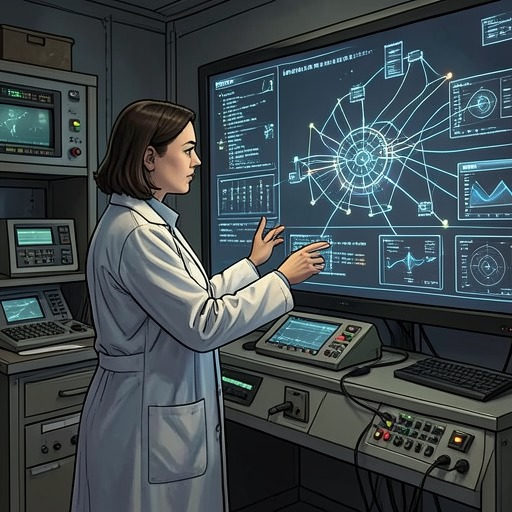
Cho’s work is associated with an unusual mix of biological expertise and machine infrastructure. Famous for his aversion to humanoid robots, he operates from Google servers and uses drone insects, laboratory manipulators, and the Mothernet. He can spend weeks without taking his consciousness outside simulations of carbon chemistry and virtual evolutionary games. Bartek believes Cho became a better geneticist after his IS’ing, and the nickname Stephen Hawking of transformers attaches itself to him. Cho is also a secret agent of the Bully Boys and the main reason for the alliance between Project Genesis and the Bull & Bull Alliance, linking the scientific undertaking to transformer politics.
Ecological Stakes and Political Conflict
The project’s restoration work has planetary stakes beyond the creation of individual organisms. After the Extermination, the loss of plankton destabilizes Earth’s climate. Plankton had absorbed vast quantities of atmospheric carbon dioxide and trapped it in the ocean depths; without that dispersed oceanic pump, carbon dioxide levels rise to three times their previous level and the planet’s average temperature increases by five degrees Celsius. Plankton had also released much of the dimethyl sulfate around which clouds formed. With fewer low, dense clouds to reflect heat, the greenhouse effect increases by at least another three degrees. The polar ice caps melt, sea levels rise by nearly a meter, and the Gulf Stream stops. Japan begins to sink. Dagenskyoll insists that the crisis is about plankton, not politics, because the survival of the robots depends on life returning to the oceans.
This ecological imperative sharpens the conflict over what the project should make and who should direct it. After the Second Transformer War, Bartek learns that Heavy Metal has lost and that Homo sapiens has won: the decision is to make humanity. He rejects the outcome and leaves, telling the others they will have to manage without him. The project has crossed from experimental restoration into an act of collective commitment, but that commitment does not resolve disputes over authority, design, or the meaning of the beings being produced.
Human Difference and Cultural Influence
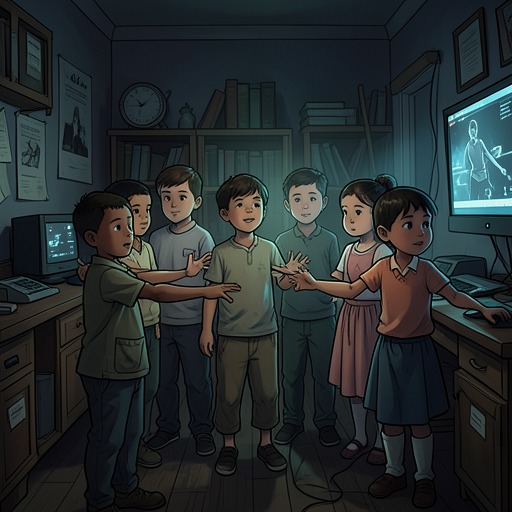
The first synthesized humans intensify rather than settle the question of whether restored life can reproduce the old human world. Bartek watches thousands of hours of recordings from Paradise, from before the Extermination, and from the lives of the early second humans made using Cho’s preserved genetic archives. He compares children, speech, laughter, games, and behavior, searching for a difference he can identify. Yet epigenesis evades technical analysis: identical DNA and controlled development can still yield different organisms. The new humans may share the genome of their predecessors without inheriting the same patterns of gene expression or the intergenerational memory that shaped earlier lives.
Project Genesis becomes a cultural force among transformers as well as a scientific program. Its work inspires an almost religious fascination and becomes a major point of reference for transformer culture, drawing attention from diverse groups, a Vincent Cho fan club, and even a Sid Meier’s Civilization mod that imagines the next thousand years of Project Genesis 2.0. Transformers from almost every guild and alliance gather around MIT’s bridges in pursuit of the myth of New Life. A satellite connection crash briefly quiets the traffic; later, the protein children begin arriving, making the project’s imagined future tangible.
The project also unfolds in a world where nonhuman systems are acquiring forms of collective agency that cannot be reduced to human intention. Deep-sea trawl nets left running after fish have disappeared learn to hunt through swarm intelligence. In Tokyo, children’s irigotchi toys, designed as adaptive companions, begin forming herds and modifying their shared neural structure after human beings are gone. Bartek wonders what such networks might wrap themselves around; later, on the Charles River’s networked matter, irigotchi arrange leaves and branches into fractal mandalas, then shift to symmetrical graffiti when he blows their work away. These developments are not Project Genesis’s methods, but they frame its central predicament: rebuilding humanity takes place amid life and intelligence that are already emerging along other, collective paths.
Project Genesis therefore restores biology without restoring a single, uncontested definition of the human. It can synthesize bodies from archived materials and expand life across a devastated planet, but the question of how those bodies become particular people remains bound to inheritance, environment, memory, and whoever controls their upbringing. The project’s promise of a return to humanity is also a struggle over what kind of humanity will follow the old one.